The Future of Survival Games in VR
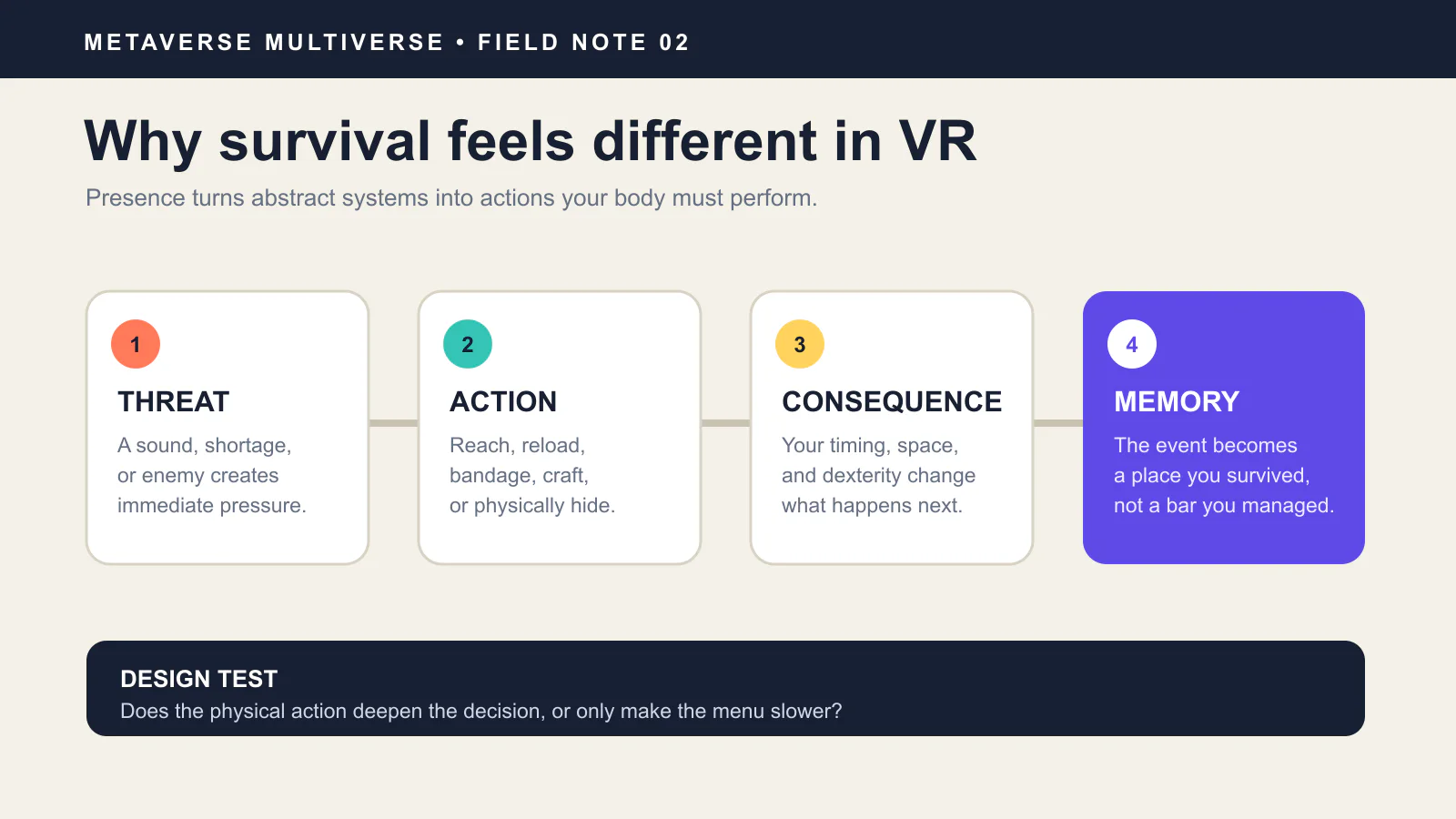
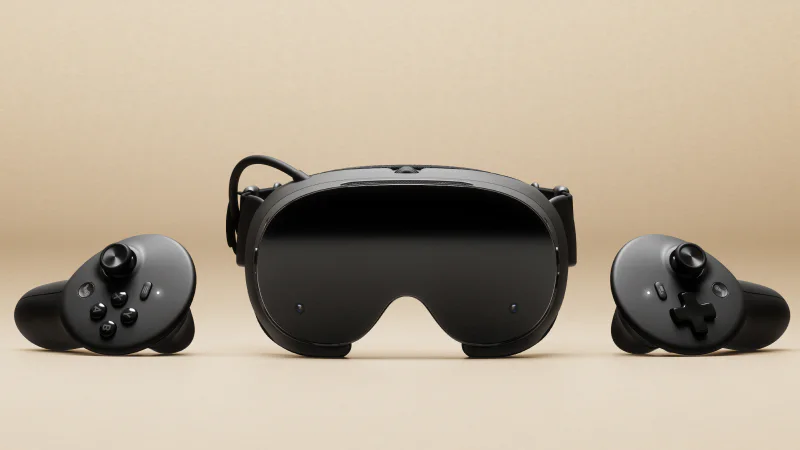
Image: Metaverse Multiverse
Point at a monitor and ask a survival veteran what a low health bar feels like, and they will describe a number. Put that same moment inside a headset, hands shaking as you fumble a bandage while something moves in the dark, and the number becomes a heartbeat. That gap is the whole argument for survival games in VR. Of every genre chasing immersion in 2026, survival has the most to gain, because its core loops of scarcity, tension, and craft are exactly the things presence amplifies.
Here is where the genre is heading, and why.
Presence changes the core loop
Traditional survival games ask you to manage systems: hunger, stamina, inventory, threat. On a flat screen these are dials and menus. In VR they become physical actions. You reach for a torch, you physically duck behind cover, you hold a wound closed instead of pressing a heal key. The friction that would annoy you in a spreadsheet feels earned when your own hands do the work.
Three mechanics benefit most:
- Resource handling. Manual reloading, crafting, and cooking turn from button prompts into small rituals. Scarcity hits harder when dropping your last magazine is a real, clumsy mistake.
- Fear and tension. Horror and survival overlap for a reason. Not being able to see behind you, and having to turn your actual head to check, is a level of vulnerability a monitor cannot fake.
- Spatial navigation. Learning a map with your body rather than a minimap builds the kind of mental geography that makes a world feel like a place you survived, not a level you cleared.
Extraction and roguelike loops fit the headset
The genres colliding with survival in 2026, extraction shooters and survivors-like roguelikes, are a strong match for VR sessions. Extraction runs are short, high-stakes, and built around the panic of getting out alive, which suits the intensity of a headset where you cannot glance at your phone. Roguelike structure keeps sessions bite-sized, which matters when comfort and fatigue still cap how long people play in VR.
One to watch: MECH Stranded. BudLeiser’s MECH Stranded explores scarcity and tension in a flat-screen mech-survival format. It is not a VR title and should not be read as one; the project is included here as a nearby design reference for survival-loop decisions. See what the developers are building.
What is still hard
VR survival is not a solved problem. Comfort remains the ceiling: long marathon sessions, a survival staple, run into fatigue and motion issues that flat games never face. Inventory management, so easy with a mouse, can turn fiddly when every item is a physical object. And the content cost is real, because hand-crafted, reach-out-and-touch worlds take longer to build than menu-driven ones.
| Survival element | Flat-screen | In VR |
|---|---|---|
| Healing | Press a key | Hold the wound, apply the bandage |
| Reloading | Automatic prompt | Manual, and fumbleable |
| Checking your back | Camera flick | Physically turn your head |
| Session length | Hours | Capped by comfort |
The studios getting it right treat these constraints as design inputs, not bugs. Shorter, denser runs. Physicality as a feature. Tension over grind.
FAQ
Is VR survival too intense for most players? It can be, and that is part of the appeal. Good titles offer comfort options and adjustable intensity so newcomers can dial the fear down.
Do I need the most expensive headset? No. Standalone headsets handle plenty of survival titles, though higher-end hardware helps with visual fidelity that deepens immersion.
Will survival stay a VR niche? It remains a specialist audience. Its future depends on comfort, session design, and whether studios make physical interaction improve the survival decisions rather than merely slow them down.
Key takeaway
Survival is the genre with the most to gain from VR, because presence turns resource management and fear from menu chores into things your body actually feels. The studios that design around VR’s limits, rather than porting flat-screen habits, are the ones shaping what immersive survival becomes next.
vrsurvival-gamesimmersive-gamingfuture-of-gaming2026